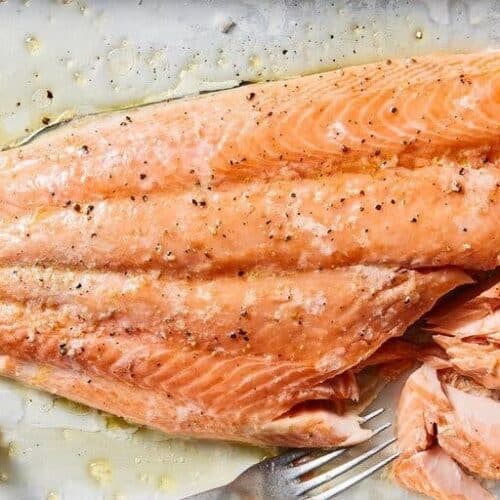
Baked Wild Salmon
This approach ensures you relish the rich taste of wild salmon without worrying about it turning dry. With its higher collagen content and lower fat levels compared to farmed salmon, wild salmon boasts firmer flesh but is also more prone to overcooking.This approach is applicable to all varieties and sizes of wild salmon, even those impressive, lengthy sockeye fillets that can be challenging to handle on a skillet or grill. Whether you prefer bold accompaniments or a minimalist approach, wild salmon can handle it all. Enhance its succulence with a splash of lemon, a dollop of Greek yogurt, or any other sauce of your choice.
Ingredients
- ¼ cup kosher salt such as Diamond Crystal or 2 tablespoons fine sea salt, plus more if needed
- 1 ½ pounds wild salmon such as coho, king or sockeye, cut in fillets or kept whole
- Extra-virgin olive oil or unsalted butter for greasing and cooking
- Black pepper
- Lemon wedges plain Greek yogurt, flaky sea salt, or a mix (optional), for serving
Instructions
- In a sheet pan or baking dish suitable for your salmon, mix the salt and 4 cups of water using a fork until the salt dissolves. Place the salmon skin side up in the mixture. If the flesh isn’t fully submerged, add another cup of water and a tablespoon of salt; it’s acceptable if the skin isn’t entirely submerged. Let it sit at room temperature for 15 to 30 minutes while you prepare the rest of your meal.
- Preheat the oven to 275 degrees.
- Drain and pat dry the salmon and the pan. Line or grease the pan, then place the salmon skin side down. Drizzle with olive oil or add a few thin slices of butter. Season with black pepper.
- Bake for 10 to 35 minutes, depending on the size and type of your fish. The edges of the fish should be opaque, but the center should still be slightly wet and translucent (the salmon will continue cooking out of the oven). The thickest part should reach a temperature between 115 and 120 degrees. Serve with a squeeze of lemon, a dollop of Greek yogurt, a sprinkle of flaky salt, or any combination you prefer.