
Why Your Cleaning Products Might Be the Problem
The home feels like the safest place for your children. But most conventional cleaning products introduce a category of air and surface pollutants that parents rarely think about: volatile organic compounds (VOCs), endocrine-disrupting chemicals, and respiratory irritants that off-gas into the air your family breathes all day.
Children are disproportionately affected by chemical exposure for two key biological reasons: their organs are still developing, making them more sensitive to toxicological disruption, and they spend more time in direct contact with treated surfaces, particularly floors and toys. A toddler who crawls across a freshly mopped floor and then puts their hands in their mouth is absorbing a concentration of cleaning residues that would never affect an adult doing the same thing.
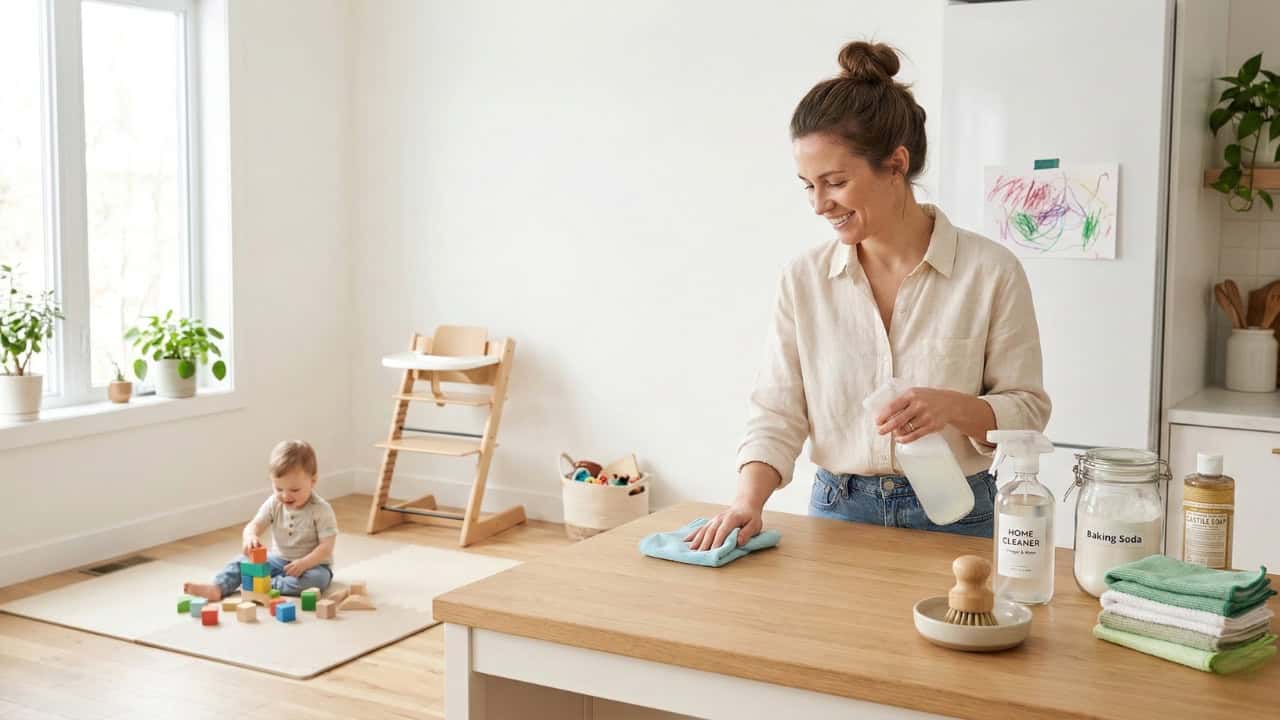
The good news is that transitioning to non-toxic cleaning is not expensive or complicated. This guide covers the specific ingredients to eliminate, the safe alternatives that actually work, DIY recipes you can make this weekend, and a room-by-room system for cleaning the whole house safely.
Toxic Ingredients to Avoid in Household Cleaners
Synthetic Fragrance
The word ‘fragrance’ on a cleaning product label can legally represent a mixture of hundreds of undisclosed chemical compounds, including phthalates, which are known endocrine disruptors linked to hormonal interference in developing children. The fragrance loophole exists because formulas are considered proprietary. Anything labeled ‘lemon scented,’ ‘fresh clean,’ or ‘ocean breeze’ should be a flag.
Phthalates
Phthalates appear in products listed as fragrance but are also sometimes listed directly as DEP (diethyl phthalate) or DBP (dibutyl phthalate). They are linked to hormonal disruption in children and adults, with research suggesting connections to reproductive development effects in boys exposed in utero. Found in: air fresheners, multi-surface sprays, fabric softeners, dryer sheets.
Ammonia
Ammonia is a powerful lung irritant that can trigger asthma attacks and respiratory distress in children, particularly those with pre-existing respiratory conditions. It reacts dangerously with bleach to produce toxic chloramine gas. Found in: glass cleaners (including most branded window spray products) and some all-purpose cleaners.
Chlorine Bleach
Household bleach is effective at disinfecting but generates chloroform and other organochlorines when used, particularly in poorly ventilated spaces. These compounds are associated with respiratory irritation and, with chronic exposure, more serious health concerns. Found in: toilet bowl cleaners, mold and mildew removers, disinfecting wipes, and laundry whitening products.
Triclosan
A synthetic antibacterial agent that was banned from hand soaps by the FDA in 2016 but still appears in some household surface cleaners and dishwashing products. It is linked to hormone disruption and contributes to antibiotic resistance. The antibacterial benefit over plain soap and water is not supported by evidence for household use.
Quaternary Ammonium Compounds (Quats)
Quats are disinfectants found in many commercial disinfecting sprays. They are effective antimicrobials but are associated with respiratory irritation, reproductive toxicity in animal studies, and antimicrobial resistance. Found in: Lysol products, disinfecting wipes, and commercial surface cleaners.
1,4-Dioxane
A byproduct of a manufacturing process that uses certain foaming agents, 1,4-dioxane is a probable human carcinogen that can appear in products that list sodium laureth sulfate or PEG compounds. It is not required to be listed as an ingredient because it is a contaminant rather than an intentional ingredient. Found in: liquid dish soaps, laundry detergents.
| Ingredient | Where It Hides | Why to Avoid | Safe Swap |
| Synthetic fragrance | Most scented products | Conceals phthalates and other unlisted compounds | Products scented with essential oils only |
| Ammonia | Glass cleaners, all-purpose sprays | Lung irritant, dangerous with bleach | White vinegar + water for glass |
| Chlorine bleach | Disinfectants, mold cleaners | Generates toxic gases in enclosed spaces | Hydrogen peroxide for disinfecting |
| Triclosan | Some dish soaps and surface cleaners | Hormone disruptor, promotes antibiotic resistance | Castile soap |
| Quats | Disinfecting wipes and sprays | Respiratory irritant, reproductive toxicity concerns | 70% isopropyl alcohol or hydrogen peroxide |
Safe Non-Toxic Cleaning Ingredients That Actually Work
White Vinegar
A 5% acetic acid solution that effectively cuts grease, dissolves mineral deposits, and inhibits many common bacteria. Not appropriate as a disinfectant for illness-level pathogens but excellent for general household cleaning. Do not use on natural stone surfaces like marble or granite, which it can etch.
Baking Soda (Sodium Bicarbonate)
A mild abrasive and deodorizer. Effective for scrubbing tubs, sinks, and stovetops without scratching. Absorbs odors from fabrics and carpets. Completely safe around children and pets.
Castile Soap
A concentrated plant-oil-based soap that creates effective surfactant action for removing dirt and grease. Dilute heavily: 1 tablespoon per quart of water for most applications. Available scented with essential oils or completely fragrance-free. Dr. Bronner’s is the most widely available brand.
Hydrogen Peroxide (3%)
The standard 3% hydrogen peroxide from any pharmacy is an effective household disinfectant that kills bacteria, viruses, and mold without generating the toxic byproducts of bleach. It decomposes to water and oxygen. Safe on most surfaces. Keep in a dark container as light degrades it.
DIY Non-Toxic Cleaning Recipes
All-Purpose Spray
Mix 1 cup white vinegar, 1 cup water, 15 drops tea tree essential oil, and 10 drops lavender essential oil in a spray bottle. Effective on most kitchen and bathroom surfaces. Shake before each use.
Bathroom Scrub
Combine 1 cup baking soda, 1/4 cup castile soap, 10 drops tea tree oil, and enough water to create a paste. Apply with a sponge, let sit for 5 minutes, then scrub and rinse. Works on tubs, tiles, and sinks.
Glass Cleaner
Mix 2 cups water, 1/2 cup white vinegar, and 1/4 cup 70% rubbing alcohol. Spray and wipe with a microfiber cloth. Streak-free on windows and mirrors.
Fabric Deodorizer Spray
Combine 1 cup water, 1 tablespoon baking soda, and 10 drops of your preferred essential oil in a spray bottle. Safe on upholstery, carpets, and children’s fabric toys.
Room-by-Room Non-Toxic Cleaning Guide
Kitchen
Surfaces: all-purpose vinegar spray for countertops and appliance exteriors. Stovetop: baking soda paste for baked-on grease. Sink: baking soda + castile soap scrub. Dishes: fragrance-free dish soap or plain castile soap. Oven: baking soda + hydrogen peroxide paste, left overnight then wiped clean.
Bathroom
Toilet: hydrogen peroxide inside bowl, baking soda scrub on the exterior. Tiles and tub: baking soda scrub. Mirrors: vinegar-alcohol glass spray. Mold on grout: undiluted 3% hydrogen peroxide applied directly, left 30 minutes, then scrubbed.
Baby’s Room and Nursery
Floor: diluted castile soap in warm water, damp mop or cloth. Crib and hard toys: 3% hydrogen peroxide spray, wipe clean, allow to air dry fully before use. Fabric toys: cold wash with fragrance-free laundry detergent. Air: open windows daily; avoid synthetic air fresheners entirely.
Living Room
Hard floors: diluted castile soap. Upholstery: baking soda sprinkled and vacuumed after 30 minutes for odors; fabric deodorizer spray. Glass surfaces: vinegar-alcohol spray.
Frequently Asked Questions
What are the most toxic cleaning products for children?
The most toxic cleaning products for children include bleach-based disinfectants, ammonia-based glass cleaners (like many branded window sprays), synthetic air fresheners and plug-ins, dryer sheets containing synthetic fragrance, and conventional disinfecting wipes containing quaternary ammonium compounds.
Is vinegar safe to use around babies?
Yes. White vinegar (5% acetic acid) is safe to use around babies for general cleaning. It is non-toxic, biodegradable, and leaves no harmful residue once dry. The smell dissipates quickly. It is not appropriate as a disinfectant for illness scenarios (like norovirus) where a stronger antimicrobial is needed.
What is the safest disinfectant to use with children in the home?
For routine disinfecting around children, 3% hydrogen peroxide (standard pharmacy strength) is the safest effective option. Spray, allow to sit for 1 minute, and wipe clean. For illness-level disinfection (stomach bugs, cold and flu), 70% isopropyl alcohol on hard surfaces is effective and has no residual toxicity once evaporated.
Are essential oils safe to use in cleaning products around babies?
With caveats. Lavender and chamomile are generally considered safe around infants. Tea tree oil should be used in diluted form (no more than 0.5% concentration for surfaces in a baby’s room). Eucalyptus, peppermint, and rosemary are not recommended for use around children under 2 due to potential respiratory effects. Always ensure the room is well ventilated.
Do non-toxic cleaners actually disinfect?
Yes, for most household purposes. Hydrogen peroxide at 3% kills the majority of common household bacteria and viruses. Isopropyl alcohol at 70% is an EPA-registered disinfectant. For everyday cleaning without illness exposure, non-toxic cleaners maintain a level of hygiene that is completely appropriate for a healthy family home.
| QUICK ANSWER
The most harmful cleaning ingredients to avoid around babies and young children include phthalates (in synthetic fragrances), ammonia, chlorine bleach, triclosan, quaternary ammonium compounds (quats), and 1,4-dioxane. Safe alternatives include white vinegar, baking soda, castile soap, and hydrogen peroxide. Most commercial non-toxic cleaning brands replace these with plant-derived surfactants and essential oil-based fragrances. |