
What Is Clean Beauty and Why Moms Are Paying Attention
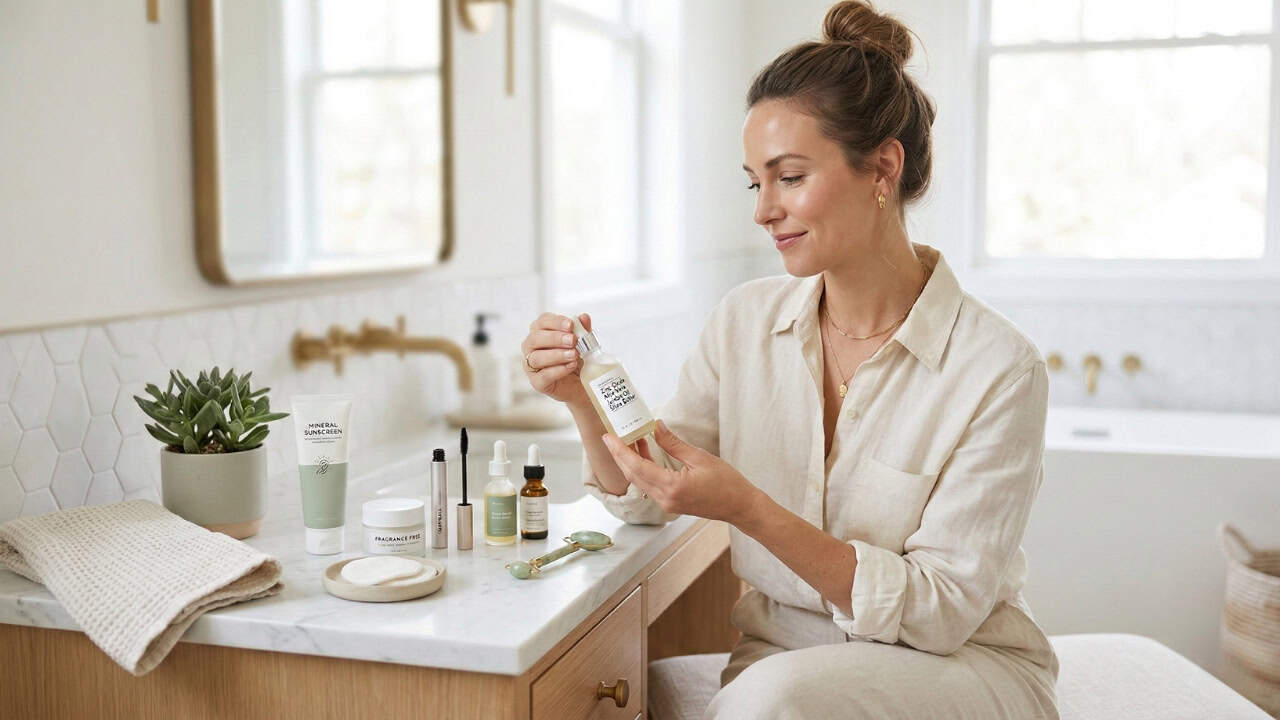
Clean beauty refers to personal care products formulated without ingredients that have known or suspected health concerns, including endocrine disruptors, carcinogens, irritants, and compounds that accumulate in the body. It is distinct from organic or natural beauty (which are specific certifications about ingredient sourcing) and from fragrance-free (which addresses only one category of concern).
Moms have particularly strong reasons to care about this category. During pregnancy and breastfeeding, the skin is more permeable to certain compounds, and anything absorbed enters the bloodstream. Several common beauty ingredients, including phthalates, parabens, and oxybenzone, have been detected in umbilical cord blood and breast milk in research studies. The prenatal and postpartum period is when the motivation to reduce unnecessary chemical exposure is both highest and most biologically justified.
The clean beauty industry has also matured considerably. A decade ago, the honest critique was that natural formulas did not perform comparably to conventional products. That is no longer broadly true. Effective clean SPF, clean mascaras, clean deodorants, and clean skincare are available and work well when selected with the right criteria.
The Key Toxic Ingredients to Avoid in Beauty Products
Parabens (Methylparaben, Propylparaben, Butylparaben)
Parabens are preservatives used in a wide range of personal care products to prevent microbial growth. They are absorbed through the skin and have been detected in human tissue, including breast tissue. They function as xenoestrogens, compounds that mimic estrogen in the body, and their potential role in hormone-sensitive conditions has been under research review for over two decades. Look for them in moisturizers, foundations, shampoos, conditioners, body lotions, and face washes. Any ingredient ending in ‘-paraben’ is one to avoid.
Phthalates (DBP, DEHP, DEP)
Phthalates are plasticizers that appear in beauty products primarily as components of synthetic fragrance. They are classified as endocrine disruptors and have been associated with developmental and reproductive effects in animal studies and epidemiological research. Because fragrance formulas are proprietary, phthalates are usually not listed on the label. Avoiding synthetic fragrance is the most reliable way to reduce phthalate exposure from beauty products.
Formaldehyde and Formaldehyde-Releasing Preservatives
Formaldehyde is a known carcinogen that appears in beauty products as a direct ingredient and as a byproduct of formaldehyde-releasing preservatives including DMDM hydantoin, quaternium-15, imidazolidinyl urea, and diazolidinyl urea. These are common in shampoos, conditioners, nail polishes, and some baby bath products. The safety concern is particularly relevant for products used on children.
Synthetic Fragrance
The term ‘fragrance’ on a beauty product label is a legally protected trade secret that can represent a mixture of hundreds of chemicals, including those that are not approved for stand-alone use. Under the FDA and EU cosmetics regulations, fragrance compounds are not required to be individually disclosed. Phthalates, formaldehyde donors, and sensitizers commonly appear within fragrance blends. If a product lists ‘fragrance’ or ‘parfum’ and the source is not specified as natural essential oils, it warrants caution.
Oxybenzone and Octinoxate (Chemical Sunscreen Filters)
Oxybenzone is the most widely used chemical UV filter in conventional sunscreens and has been detected in human blood, urine, and breast milk after a single application. The FDA has called for more safety data on oxybenzone and several other chemical sunscreen filters. The clean alternative is mineral sunscreen (zinc oxide or titanium dioxide), which provides broad-spectrum protection by physically blocking UV radiation rather than absorbing it. Mineral SPF is recommended by pediatric dermatologists for children and pregnant women.
Sodium Lauryl Sulfate (SLS) and Sodium Laureth Sulfate (SLES)
SLS and SLES are surfactants that produce lather in shampoos, body washes, and cleansers. SLS is a known skin irritant that disrupts the skin barrier and strips protective oils, which is particularly problematic for the developing skin microbiome. SLES is less irritating but can be contaminated with 1,4-dioxane (a probable carcinogen) as a manufacturing byproduct.
BHA and BHT (Butylated Hydroxyanisole and Butylated Hydroxytoluene)
BHA and BHT are synthetic antioxidants used as preservatives in lipsticks, moisturizers, and other products. BHA is classified as a possible human carcinogen by the IARC. Both act as endocrine disruptors and have been found to bioaccumulate. They are found in lip balms, lipsticks, moisturizers, and some sunscreens.
Triclosan
An antibacterial agent banned from hand soaps in 2016 by the FDA but still found in some toothpastes, deodorants, and body washes. It is an endocrine disruptor and has been linked to thyroid hormone disruption and antibiotic resistance. Check deodorant and toothpaste ingredient lists specifically.
| Ingredient | Commonly Found In | Concern | Safe Swap Signal |
| Parabens | Moisturizers, shampoo, body lotion | Xenoestrogen activity | Look for: paraben-free label |
| Synthetic fragrance | Nearly all scented products | Conceals phthalates and sensitizers | Look for: essential oil-scented or fragrance-free |
| Oxybenzone | Chemical sunscreens | Hormone disruption, environmental harm | Look for: zinc oxide or titanium dioxide SPF |
| SLS/SLES | Shampoo, body wash, cleanser | Skin irritation, barrier disruption | Look for: coco glucoside, decyl glucoside |
| Formaldehyde donors | Shampoo, baby products, nail products | Carcinogen, sensitizer | Look for: DMDM hydantoin-free formulas |
| BHA/BHT | Lip products, moisturizers | Possible carcinogen, endocrine disruption | Look for: tocopherol (vitamin E) as preservative |
How to Read a Beauty Product Label
Ingredients on personal care product labels are listed in descending order of concentration: the ingredients present in the highest quantities appear first, and those in trace amounts appear last. Water (aqua) is typically first in most rinse-off products.
The most important label-reading skill is recognizing the fragrance loophole: ‘fragrance’ or ‘parfum’ appearing anywhere on the list means the product contains an undisclosed mixture. If the label instead lists specific essential oils (lavender oil, rosehip oil, bergamot oil), the source is transparent.
INCI names (International Nomenclature Cosmetic Ingredient) are the standardized Latin-derived ingredient names required by law. Niacinamide is vitamin B3. Tocopherol is vitamin E. Retinol is vitamin A. Learning even a dozen common INCI names dramatically improves your ability to evaluate a product’s safety profile.
Clean Beauty Swaps by Category
Moisturizer
Swap products containing parabens and synthetic fragrance for formulas using natural preservatives (sodium benzoate, rosemary extract, tocopherol) and essential oil or unscented options. What to look for: hyaluronic acid, ceramides, plant oils (jojoba, rosehip, marula), and vitamin E as core ingredients.
SPF (Most Important Swap for Moms)
Replace chemical sunscreens containing oxybenzone or octinoxate with mineral SPF formulas using zinc oxide (broad spectrum coverage, photostable, reef-safe, pediatrician-recommended). Modern zinc oxide formulas are available in elegant, non-whitening finishes for daily use. This is the highest-priority swap for both moms and children.
Deodorant
Conventional antiperspirants use aluminum salts to block sweat glands, and while the aluminum-breast cancer link remains inconclusive in research, many women prefer to avoid aluminum during pregnancy and nursing. Clean deodorant alternatives using magnesium, baking soda, or bacterial enzyme inhibitors (Mandelic acid) are effective for many women, though they do not eliminate sweating entirely.
Mascara
Look for mascaras free of parabens, formaldehyde donors, and synthetic fragrance. Several clean beauty brands now produce mascaras with comparable performance to conventional products using plant-based waxes and natural pigments.
Postpartum Skincare
Postpartum skin is affected by hormonal fluctuations that can cause hyperpigmentation, acne, and increased sensitivity. During breastfeeding specifically, retinoids (including retinol), salicylic acid at high concentrations, and benzoyl peroxide are generally not recommended. Clean postpartum skincare focuses on gentle exfoliation (PHAs, low-concentration AHAs), niacinamide for hyperpigmentation, and barrier-supporting oils and ceramides.
| Meghna’s Favorite Clean Swaps
After years of rebuilding my beauty routine to be cleaner, the non-negotiables for me are: mineral SPF every single day, fragrance-free everything for my children’s products, and a nighttime routine built around rosehip oil and a simple ceramide moisturizer. You do not have to swap everything at once. Start with SPF and your children’s products. The rest follows naturally. |
Frequently Asked Questions
What are the most toxic ingredients in beauty products?
The beauty ingredients with the strongest evidence of potential harm are parabens (endocrine disruption), phthalates (usually hidden in synthetic fragrance, reproductive concerns), oxybenzone in chemical sunscreens (hormone disruption, detected in breast milk), formaldehyde-releasing preservatives (carcinogen), and triclosan (endocrine disruption, antibiotic resistance).
What does clean beauty actually mean?
Clean beauty refers to personal care formulated without ingredients that have known or credibly suspected health concerns, including endocrine disruptors, carcinogens, and bioaccumulative compounds. There is no universal regulatory standard for ‘clean beauty.’ Each brand defines its own criteria, which is why reading the actual ingredient list remains important even when products are marketed as clean.
What skincare ingredients should I avoid while breastfeeding?
During breastfeeding, many dermatologists recommend avoiding retinoids (including retinol and tretinoin), high-concentration salicylic acid, hydroquinone, and chemical sunscreen filters like oxybenzone. Safe alternatives include mineral sunscreen (zinc oxide), niacinamide, azelaic acid, vitamin C (ascorbic acid), hyaluronic acid, and ceramides. Always discuss specific skincare concerns with your OB or dermatologist.
Is clean beauty worth the cost?
Clean beauty products vary widely in price. Many affordable clean options exist alongside premium brands. For most categories (shampoo, body wash, moisturizer), effective clean formulas are available at comparable or only slightly higher price points than conventional products. The highest-value switch is mineral SPF, which is widely available at accessible price points.
How do I know if a beauty product is truly clean?
Check the full ingredient list, not just the front label claims. Look specifically for parabens (any ingredient ending in -paraben), the word ‘fragrance’ or ‘parfum’ without specification, DMDM hydantoin or quaternium-15 (formaldehyde releasers), oxybenzone, and triclosan. Third-party databases like EWG Skin Deep provide ingredient-by-ingredient safety ratings.
| QUICK ANSWER
The top toxic beauty ingredients moms should avoid include parabens (preservatives linked to hormone disruption), phthalates (hidden in synthetic fragrance), formaldehyde-releasing preservatives, oxybenzone (in chemical sunscreens), triclosan, sodium lauryl sulfate, BHA and BHT, and synthetic fragrance (which can contain dozens of undisclosed chemicals). Clean beauty swaps are equally effective for most applications when selected properly. |