


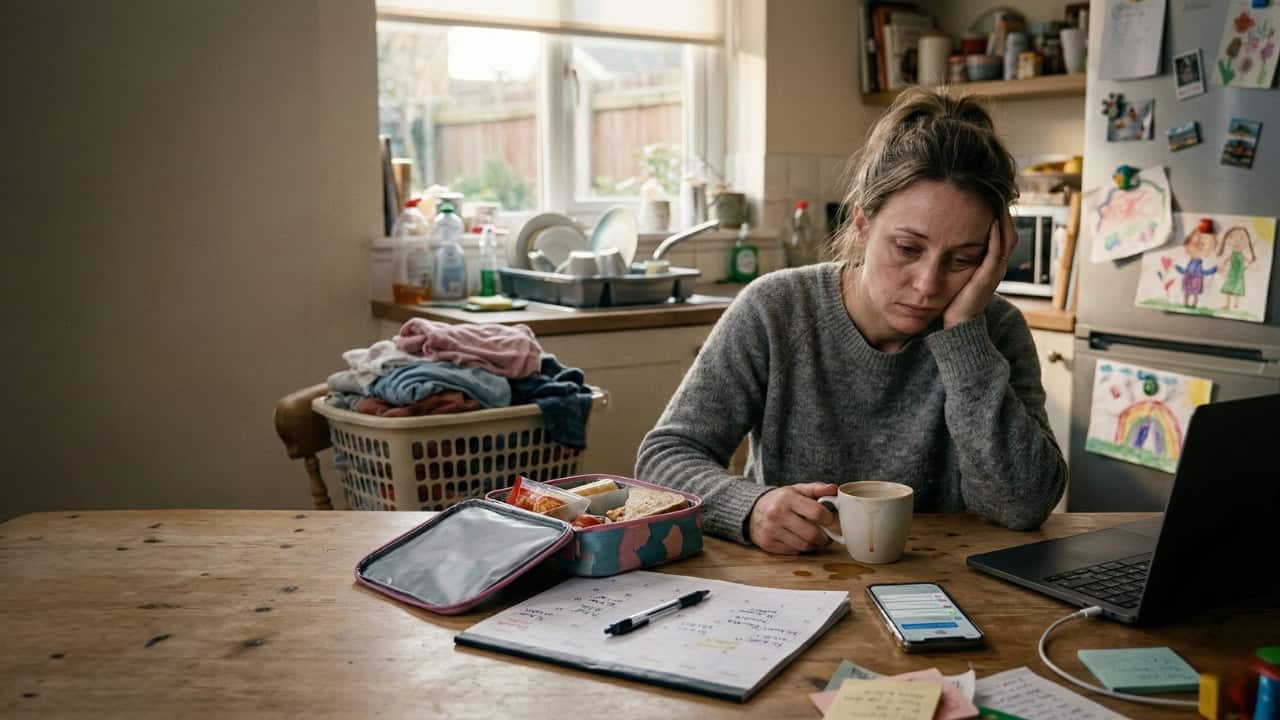
You Are Not Alone, and This Is Real
If you have clicked on this article, chances are you have already been feeling it for a while. The low-grade dread on Sunday nights. The snapping at your kids over nothing. The crying in the car after drop-off. The feeling of going through the motions while something in you has quietly switched off.
Mom burnout is not a character flaw. It is not a sign of insufficient love for your children. It is a clinical state of depletion that occurs when demands consistently exceed resources for too long, without adequate recovery. Research from maternal health institutions indicates that the majority of mothers report symptoms of chronic stress or burnout at some point in their parenting journey, and the numbers have increased significantly in the past decade as expectations of modern motherhood have escalated without a corresponding increase in support.
This guide is going to be direct about what burnout is, how to recognize it, what causes it, and what actually works to recover from it. Not bubble baths. Not advice to just exercise more. Real, practical, tested strategies.
What Is Mom Burnout? A Clear Definition
Mom burnout is a specific form of caregiver burnout characterized by three core dimensions: emotional exhaustion (feeling completely drained with nothing left to give), depersonalization (emotional distancing or numbness toward your children and responsibilities), and a reduced sense of accomplishment (persistent feeling that nothing you do is enough, regardless of how hard you work).
It is distinct from general tiredness. Tiredness resolves with rest. Burnout does not. After two full nights of sleep, the burnout is still there. That distinction is the clearest signal that what you are experiencing is more than fatigue.
The term entered the clinical literature in the 1970s through occupational psychology, but its application to maternal experience has been increasingly studied since the early 2000s. Researchers including Dr. Isabelle Roskam at UCLouvain have published extensively on parental burnout as a distinct syndrome requiring specific interventions.
The 12 Warning Signs of Mom Burnout
You do not need all twelve signs to be experiencing burnout. Three or more that have been present consistently for more than two weeks are sufficient reason to take this seriously.
- Constant irritability. A hair-trigger temper that surprises even you. Snapping at your children or partner for things that would not have bothered you before.
- Emotional withdrawal. You are physically present but feel checked out. You go through the motions of parenting but feel disconnected from it.
- Exhaustion that sleep does not fix. You sleep a reasonable number of hours but wake up feeling as depleted as when you went to bed.
- Dreading mornings. A sense of dread about the day ahead that begins before you even get out of bed.
- Crying with no clear trigger. Unexplained emotional releases that feel disproportionate and confusing.
- Loss of joy. Activities or interests that used to restore you feel like obligations, or you have stopped doing them entirely.
- Feeling like a failure. A persistent internal narrative that you are not doing enough, are not a good enough mother, and that everyone else has it together.
- Physical symptoms. Frequent headaches, gastrointestinal issues, getting sick more than usual, chronic muscle tension, or disrupted sleep.
- Numbness toward your children. Moments where you feel little or no emotional warmth toward them, followed by significant guilt.
- Toward your partner, your children, your life, or the version of yourself you had before children.
- Inability to be present. Your body is at the playground or the dinner table but your mind cannot be reached.
- Feeling trapped. A persistent sense that there is no exit, no break, no one who genuinely understands the weight of what you are carrying.
| Quick Symptom Check
Read this list again and count how many you have experienced consistently for more than two weeks. If the number is three or more, this is a signal worth taking seriously. Burnout does not resolve on its own without deliberate change. |
What Causes Burnout in Mothers?
Understanding causes matters because recovery requires addressing the actual sources, not just managing the symptoms.
- Invisible labor accumulation: The mental load of managing a household and family, including tracking appointments, anticipating needs, managing logistics, and coordinating everything, is largely invisible and largely unsupported. This ongoing cognitive demand depletes resources relentlessly.
- Perfectionism and societal pressure: Social media and cultural messaging have raised the bar for what constitutes ‘good mothering’ to an impossible standard. The internalized gap between that standard and daily reality is a direct burnout driver.
- Loss of identity: Many mothers experience a grief process around the loss of pre-child identity, interests, friendships, and career trajectory. When motherhood becomes the only identity available, it carries impossible weight.
- Lack of community: Previous generations of mothers parented in physically proximate communities where support was ambient. Modern parenting is often profoundly isolated.
- Financial stress: Economic pressure amplifies all other stressors and reduces access to the childcare, rest, and support that burnout recovery requires.
How to Recover from Mom Burnout: Step by Step
Immediate Relief (This Week)
- Name it out loud. Tell your partner, a friend, or a therapist exactly what you said to yourself reading this article. Naming burnout breaks the shame spiral that keeps it hidden and untreated.
- Eliminate one obligation. Just one, this week. Say no to one non-essential thing. This is not laziness. It is triage.
- Sleep is non-negotiable. Negotiate one extra hour of sleep tonight. Not self-care in the abstract. Actual sleep.
- Ask for one concrete form of help. Not ‘I need help’ but ‘I need you to handle dinner on Tuesday and Thursday this week.’ Specific requests get results. Vague requests get well-meaning inaction.
Medium-Term Recovery (The Next Month)
Build a weekly micro-recovery routine. This is not a spa day. It is a protected 30-60 minute window, at least two to three times per week, where you do something that belongs entirely to you. A walk alone. A book that has nothing to do with parenting. A hobby. Protect these windows like appointments.
Consider therapy. Burnout responds exceptionally well to cognitive behavioral therapy and acceptance and commitment therapy approaches. If cost is a barrier, many therapists offer sliding scale fees, and online therapy platforms have reduced the access barrier considerably.
Begin rebuilding one non-mom identity thread. A creative interest, a professional skill, a physical activity, a community. One thread is enough to start pulling on.
Long-Term Recovery (Ongoing)
Systems, not willpower. Burnout recurs when underlying conditions do not change. This means having honest conversations about labor distribution in your household, building a genuine support network, and making choices that prioritize sustainability over perfection.
Boundaries are recovery infrastructure. Learning to say no without extensive justification, to prioritize your own sleep and needs without guilt, and to allow certain standards to drop is not selfish. It is structurally necessary.
When to Seek Professional Help
Burnout and depression exist on a continuum and can overlap. If any of the following are present, please speak with a doctor or mental health professional promptly: persistent hopelessness that does not lift, thoughts of self-harm or disappearing, inability to care for your children due to emotional paralysis, or symptoms that have been present for more than four weeks without any improvement.
Postpartum depression and postpartum anxiety are distinct clinical conditions that sometimes develop alongside burnout, particularly in the first two years after birth. Both are highly treatable. There is no version of this where pushing through without support is the right answer.
| Meghna’s Reflection
I have experienced burnout personally. There was a period running MamaBee, raising two children, and managing everything else where I was operating on a combination of adrenaline and guilt. The turning point was admitting it was burnout and not weakness. Recovery started with one conversation, one reassigned task, and one morning per week that was mine. It is slow work. But it is real work. You deserve to recover. |
Frequently Asked Questions
Is mom burnout a real condition?
Yes. Parental burnout is recognized in the psychological literature as a distinct syndrome separate from work burnout or clinical depression. Research by Dr. Isabelle Roskam and colleagues has validated specific tools for assessing parental burnout and identified it as a genuine public health concern affecting millions of parents globally.
How long does burnout take to recover from?
Recovery from burnout is highly individual. With deliberate changes to workload, support systems, and self-care practices, many people begin to notice meaningful improvement within 4-8 weeks. Full recovery can take six months to a year, particularly when burnout has been severe or longstanding. Professional support accelerates recovery significantly.
Can burnout cause physical symptoms?
Yes. Chronic burnout activates the body’s stress response system, which elevates cortisol over sustained periods. This can lead to frequent illness (due to immune suppression), headaches, gastrointestinal issues, chronic fatigue, disrupted sleep, heart palpitations, and muscle tension. Physical symptoms often improve as burnout is addressed.
What is the fastest way to start recovering from burnout?
The single most effective immediate intervention is removing at least one significant stressor or obligation. Recovery cannot begin while the burnout conditions remain unchanged. Sleep, professional support, and one reliable source of personal restoration (not productivity) are the three highest-impact variables.
How is burnout different from depression?
Burnout is primarily caused by external overwhelm and improves significantly when circumstances change. Depression is a clinical condition with biological and psychological components that often requires medication and therapy regardless of external circumstances. The two can co-occur. If you are unsure which you are experiencing, speaking with a licensed mental health professional is the right step.
| QUICK ANSWER
Mom burnout is a state of chronic physical and emotional exhaustion caused by the sustained demands of caregiving, often combined with invisible domestic labor, loss of personal identity, and social isolation. The 12 main signs include constant irritability, emotional withdrawal, physical exhaustion that sleep does not fix, feeling like a failure, dreading mornings, crying without clear reason, loss of joy in activities you previously loved, physical symptoms like headaches and illness, numbness toward your children, resentment, inability to be present, and feeling trapped. Recovery involves rest, boundary-setting, professional support, and rebuilding your identity outside of motherhood. |