


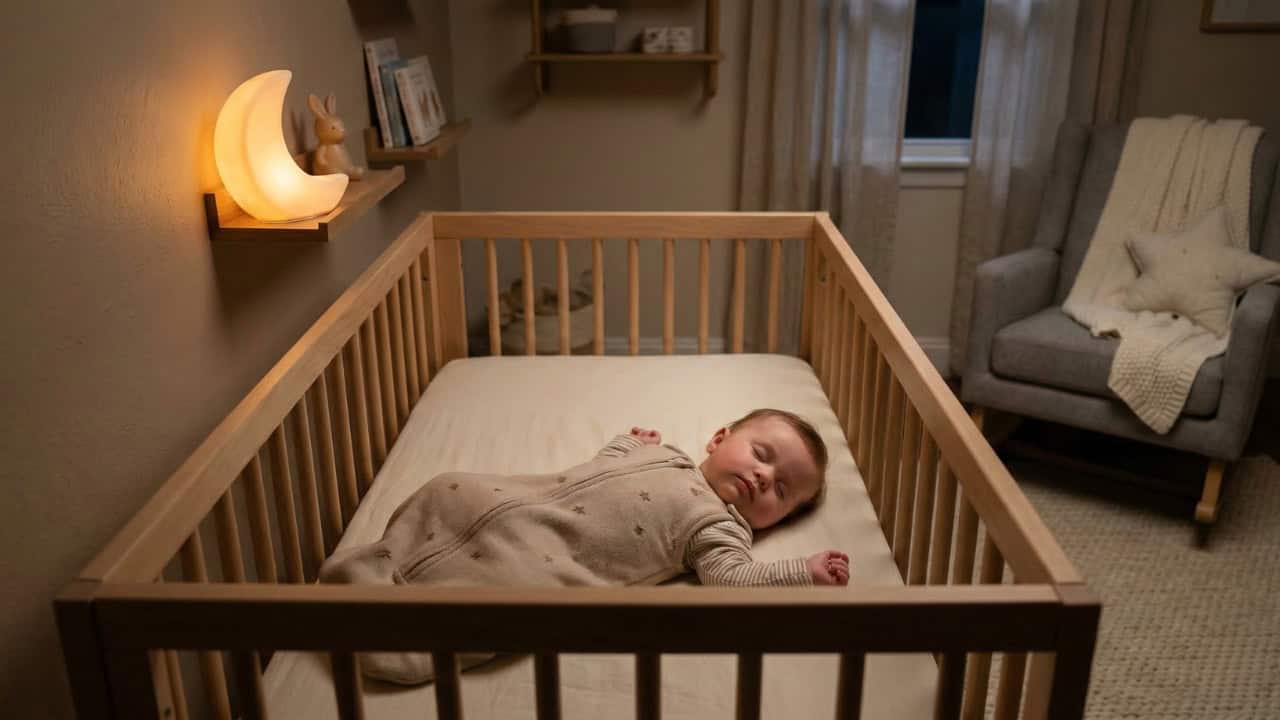
Why Baby Sleep Schedules Actually Matter
Sleep is not passive rest for a baby. During sleep, the brain consolidates everything it learned during awake time, releases growth hormone, and builds the neural pathways that support language, emotional regulation, and cognitive development. When babies are chronically overtired, they produce excess cortisol, which paradoxically makes it harder for them to fall asleep and stay asleep. The result is the overtired-can’t-sleep cycle that every exhausted parent knows intimately.
A schedule does not mean rigidity. It means understanding the biological sleep patterns of your child’s specific age, which allows you to work with their natural rhythms rather than against them. This guide gives you the actual numbers, room by room, month by month, so you can stop guessing and start sleeping.
Newborn Sleep (0-3 Months)
In the first three months of life, babies have not yet developed a circadian rhythm, the internal clock that distinguishes day from night. Sleep is driven entirely by hunger cycles, and there is no true ‘schedule’ that can be imposed. What you can do is begin setting the stage for healthy sleep habits.
| Age | Total Sleep / Day | Nap Count | Wake Windows | Night Sleep |
| 0-4 weeks | 14-17 hours | 4-6 micro-naps | 45-60 minutes | 1.5-3 hour stretches |
| 1-2 months | 14-16 hours | 4-5 naps | 60-90 minutes | 2-4 hour stretches |
| 2-3 months | 13-15 hours | 4-5 naps | 60-90 minutes | 3-5 hour stretches begin |
The most important thing at this stage is to distinguish day from night: bright light and activity during daytime feeds, darkness and quiet during nighttime feeds. This simple environmental cue begins training the circadian system.
Infant Sleep (4-6 Months)
The 4-month mark is often referred to as the 4-month sleep regression, but it is more accurately called the 4-month sleep transition. The brain permanently shifts from newborn sleep architecture to a more mature pattern with distinct sleep cycles. This is permanent and actually marks a positive neurological milestone, even though it temporarily disrupts sleep.
| Age | Total Sleep / Day | Nap Count | Wake Windows | Ideal Bedtime |
| 4 months | 14-16 hours | 3-4 naps | 1.5-2 hours | 7:00-8:30 PM |
| 5 months | 14-15 hours | 3 naps | 1.75-2.25 hours | 7:00-8:00 PM |
| 6 months | 14-15 hours | 2-3 naps | 2-2.5 hours | 6:30-8:00 PM |
At 4-6 months, many families begin gentle sleep training if the child’s pediatrician approves. Consistent nap schedules and a predictable bedtime routine are the foundation of any effective sleep training approach.
Infant Sleep (7-9 Months)
By 7 months, most babies are ready to drop to two naps. The three-nap-to-two-nap transition typically happens between 6 and 8 months. Signs your baby is ready include taking longer to fall asleep for the third nap, waking early from it, or resisting bedtime.
| Age | Total Sleep / Day | Nap Count | Wake Windows | Ideal Bedtime |
| 7 months | 13-15 hours | 2-3 naps | 2.5-3 hours | 6:30-7:30 PM |
| 8 months | 13-14 hours | 2 naps | 2.75-3.25 hours | 6:30-7:30 PM |
| 9 months | 13-14 hours | 2 naps | 3-3.5 hours | 6:30-7:30 PM |
The 8-10 month range often includes another regression triggered by major developmental leaps including crawling, pulling to stand, and increased social awareness. Staying consistent with schedule and routine is the most effective response to these temporary disruptions.
Infant Sleep (10-12 Months)
As babies approach their first birthday, wake windows grow longer and nap counts solidify at two. The two-nap schedule typically includes a morning nap roughly 3 hours after waking and an afternoon nap roughly 3-3.5 hours after the morning nap ends.
| Age | Total Sleep / Day | Nap Count | Wake Windows | Ideal Bedtime |
| 10 months | 12-14 hours | 2 naps | 3-3.5 hours | 6:30-7:30 PM |
| 11 months | 12-14 hours | 2 naps | 3.25-3.75 hours | 6:30-7:30 PM |
| 12 months | 12-14 hours | 2 naps (transitioning) | 3.5-4 hours | 7:00-8:00 PM |
Toddler Sleep (12-24 Months)
The transition from two naps to one is the most disruptive nap transition of the first two years, typically happening between 13 and 18 months. Moving too early creates an overtired child. Moving too late results in a child who will not fall asleep at nap time. Signs of readiness include consistently taking longer than 30 minutes to fall asleep for one nap, skipping naps entirely two or more days per week, and resisting bedtime significantly.
| Age | Total Sleep / Day | Nap Count | Nap Duration | Ideal Bedtime |
| 12-14 months | 13-14 hours | 2 (then transitioning) | 45-90 min each | 7:00-8:00 PM |
| 15-18 months | 12-14 hours | 1 nap | 1-3 hours | 7:00-8:00 PM |
| 18-24 months | 11-14 hours | 1 nap | 1-2.5 hours | 7:00-8:00 PM |
Signs Your Baby or Toddler Is Overtired
Overtiredness is the most common culprit behind night wakings, early morning risings, and short naps. Catching your child before they reach this state is the core skill of successful schedule management.
- Rubbing eyes, pulling at ears, or staring blankly (zoning out)
- Sudden crankiness or emotional meltdowns without a clear trigger
- Increased clumsiness or loss of coordination
- Yawning that escalates to arching the back and stiffening
- Hyper-activity and inability to settle (paradoxical overtiredness in babies)
- Difficulty latching or feeding as usual
If you see these signs, prioritize getting your baby to sleep within the next 10-15 minutes rather than pushing through.
Building a Sleep Routine That Actually Works
What Should a Baby’s Bedtime Routine Include?
A consistent bedtime routine is one of the most evidence-backed sleep tools available to parents. The routine does not need to be elaborate. It needs to be predictable, calming, and consistent.
- Dim the lights in the bedroom 20-30 minutes before target bedtime.
- Warm bath (optional but highly effective as a sleep cue).
- Change into pajamas and fresh diaper.
- Final feeding in a calm, dimly lit environment.
- Book or song (one short story or two verses of a consistent song).
- Place in crib drowsy but awake once possible, typically from 4 months onward.
- White noise machine on (consistent sound environment masks household noise).
| Meghna’s Personal Experience
With my first child, I spent three months trying to follow schedules that did not match his actual biological readiness. Once I understood wake windows, everything changed. He was not a bad sleeper. He was an overtired sleeper because I was putting him down too late. The schedule does not change the child. It reveals who the child already is when given what they actually need. |
Frequently Asked Questions
How many hours should a 6-month-old sleep?
A 6-month-old should sleep approximately 14-15 hours total per day, including 2-3 naps totaling around 3-4 hours of daytime sleep and 10-12 hours of nighttime sleep. Wake windows at this age are typically 2-2.5 hours.
When do babies drop to one nap?
Most babies transition from two naps to one nap between 13 and 18 months. The average age is around 15-16 months, though some children make this transition as early as 12 months or as late as 20 months.
What is a good 4-month sleep schedule?
At 4 months, a typical schedule includes waking for the day between 6:30-7:30 AM, three to four naps of 30-60 minutes each with wake windows of 1.5-2 hours between them, and a bedtime between 7:00-8:30 PM with an adjusted ‘dreamfeed’ around 10-11 PM if needed.
Is it OK to wake a sleeping baby to feed?
Before birth weight is regained and for the first 4-6 weeks, yes. After that, most healthy, full-term babies can be allowed to sleep as long as they naturally will during the night. Always follow your pediatrician’s specific guidance for your baby’s weight and health status.
Why is my baby waking up every hour at night?
Hourly night waking after the newborn stage is most commonly caused by overtiredness (wake windows too long), a developmental leap or regression, undertiredness (wake windows too short leading to short naps), or a sleep association like nursing or rocking to sleep that the baby needs to fall back to sleep between sleep cycles.
| QUICK ANSWER
Baby sleep needs change dramatically in the first two years. Newborns sleep 14-17 hours in 2-4 hour stretches. By 6 months, most babies sleep 11-14 hours with 2-3 naps. By 12 months, they consolidate to 2 naps totaling 13-14 hours. Toddlers (1-2 years) typically need one nap and 11-14 hours total. Wake windows and consistent bedtime routines are the two most impactful tools for improving infant sleep. |