


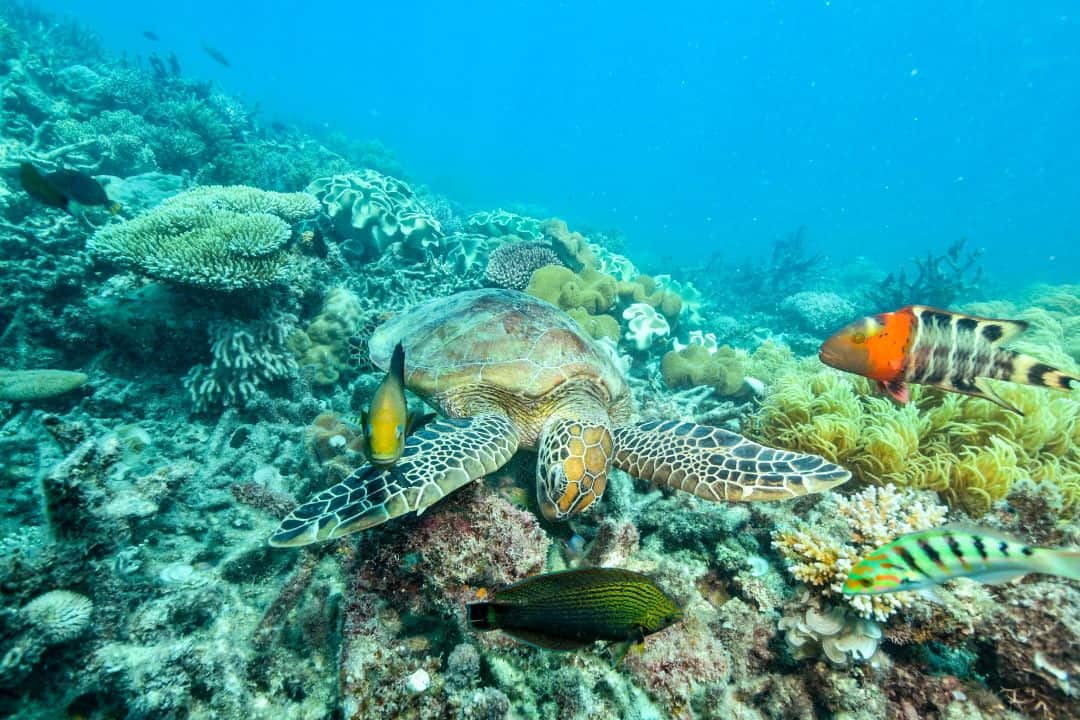
The Maldives is loved for its clear blue waters and beautiful marine life. But not everything you hear about the ocean here is true. Some things people say are myths, and some are facts.
Coral Reefs Are Just Rocks
Corals are rocks? No, they’re not. Coral reefs may look like rocks, but they’re built by tiny living beings called coral polyps.
These polyps form colonies and create hard shells made of calcium carbonate, which is what gives reefs their rock-like appearance. The reef itself is alive and grows. Corals are full of life and home to many kinds of fish and sea creatures. In fact, around one in every four marine species depends on coral reefs for food or shelter.
Coral reefs also help humans. They prevent coastline erosion and support fishing communities. Last but not least, in the Maldives, they add economic value by attracting tourists from around the world.
Sharks in the Maldives Are Dangerous to Humans
Sharks might seem scary, but most sharks in the Maldives are not dangerous – this is not an invitation to try and interact with them, though.
Reef sharks, most common type in the Maldivian waters, are usually shy and swim away if they see humans. While larger sharks like tiger sharks or bull sharks do live in these waters, attacks are extremely rare. In fact, you’re much more likely to get hurt by a strong current than by a shark.
To stay safe, follow these rules:
- Don’t try to touch or feed sharks.
- Keep a safe distance and stay calm if you see one.
- Listen to your diving or snorkelling guide and follow their instructions.
Did you know that the Maldives is also a shark sanctuary? Over 30 shark species are protected here.
To learn more about these fascinating creatures, visit the Maldives during PADI Aware Week. Consider joining a specialty snorkelling and diving excursion to learn more about sharks, mantas and more.
These experiences are offered by resorts like Avani+ Fares Maldives Resort, one of the five-star PADI dive resorts in the Maldives.
Coral Reefs Can Grow Back Quickly
Coral reefs do not grow back quickly. They grow very slowly – some only a few millimetres per year. If a reef is damaged in any way, be it pollution, tourism, or coral bleaching, it can take decades, if not centuries, to recover. In other words, it’s easier to damage them than to grow them again.
Polyps create hard skeletons over time, which form the structure of the reef. When reefs are affected by warmer sea temperatures or water pollution, the polyps die off, and the reef stops growing.
Corals may seem hardy and strong, but they’re also fragile. And as fragile as they are, they happen to be a crucial part of the ecosystem, hence the need for restoration. Some resorts offer coral restoration programmes – a fun and meaningful way to enjoy your time in the Maldives.
You Can Take Coral or Shells as Souvenirs
Absolutely not! It’s illegal to take coral, shells, or even sand from the Maldives as souvenirs.
These natural treasures are protected by law, which shouldn’t come as a surprise – they’re part of the country’s marine ecosystem. Coral reefs provide shelter for many marine animals. Not only that, but they also keep the ocean healthy.
Taking coral or shells weakens the ecosystem and makes it more challenging for marine life to survive. This is why the Maldivian government has imposed strict rules and regulations against removing these from beaches or underwater.
If you decide to take corals or shells home anyway, you’ll get caught at the airport – the ‘souvenirs’ will be taken away, and you’ll be fined. So, leave things as they are and enjoy nature without causing any disturbance, will you?
You can take pictures of the underwater world, though. Bring an underwater camera, and you’ll be left with amazing mementos of your time here.
Dolphins and Whales Are Always Friendly
In popular culture, dolphins and whales are often portrayed as friendly and playful. While many of them do show curiosity and social behaviour, remember that they’re wild animals – you cannot always predict what they’ll do next.
Some dolphins and whales enjoy playing with each other and sometimes even interact with humans. They may swim near boats or approach you, but that does not mean they’re always safe to be around.
All this is to say that no, they’re not always friendly, and yes, you should always keep a safe distance.