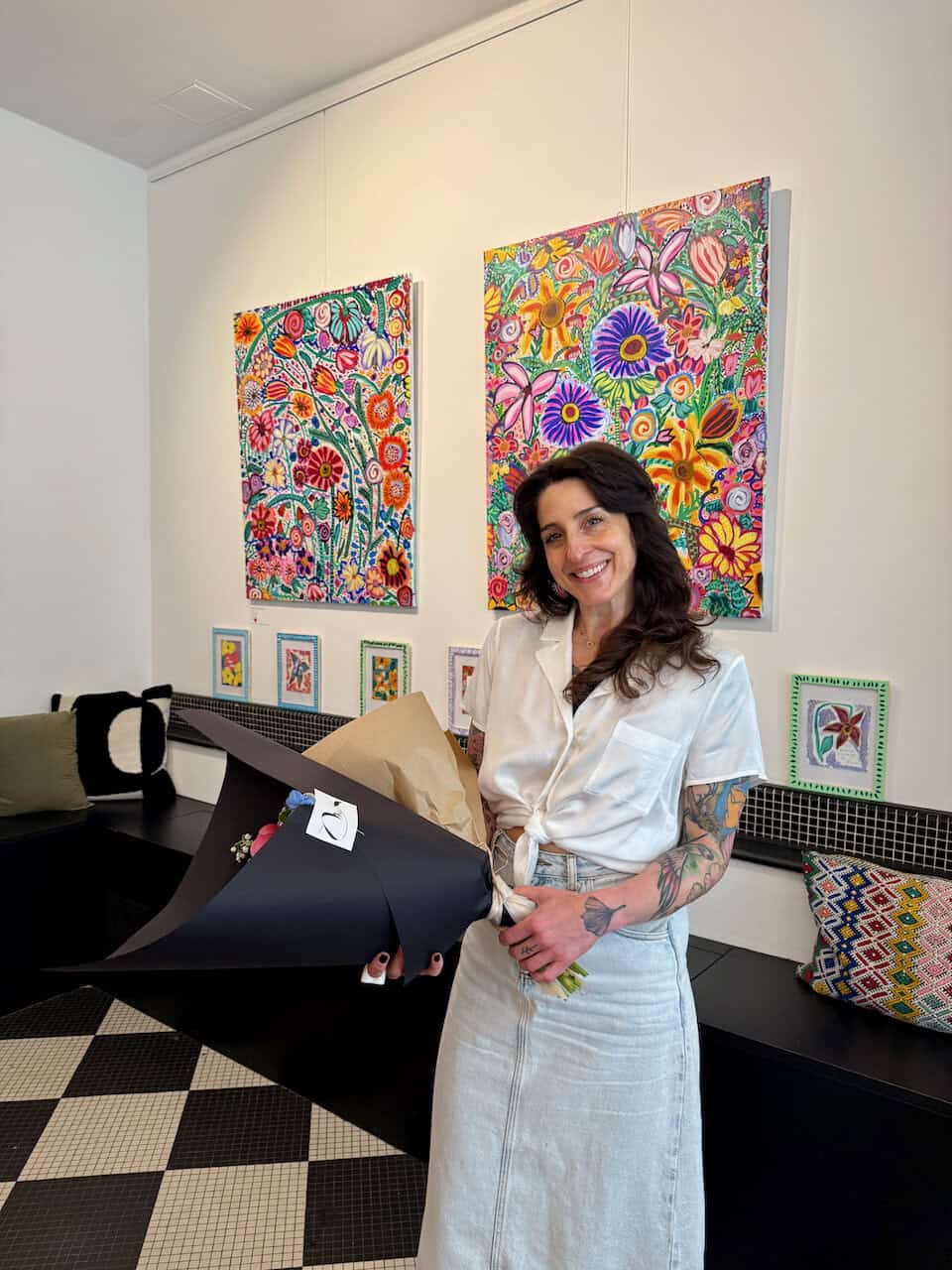
Jocelyn Ulevicus’s path has been less about arriving somewhere and more about learning how to fully inhabit herself along the way. As an artist, writer, and poet based in Paris, she has moved through grief, reinvention, and creative expansion with a kind of honesty that resists easy definition. Her journey is rooted in one central shift: “the person I was that allowed me to survive isn’t the person I need to be in this chapter of my life.”
Jocelyn says it is difficult to name one single moment that lit her leadership fire. For her, the realization that she had “something meaningful to say and contribute” came through a series of moments, relationships, and life experiences that slowly crystallized into purpose. One of the first people to shape that path was a graduate school professor who believed in her with “extraordinary conviction,” encouraging her to recognize her own worth. Much of her life abroad, and her work as a writer and artist, can be traced back to that belief.
The second, and more profound, influence was the death of her father. “His passing transformed my life,” she says. It deepened her understanding of what matters, sharpened her sense of purpose, and changed the way she moved through the world. “His death altered the trajectory of my life,” she reflects, “and brought me into a closer relationship with purpose, mortality, and meaning.”
One of the clearest examples of Jocelyn’s intuition-led path came after her father’s death, when she chose to quit her doctorate and embark on a creative life. “Logically, it may not have made much sense,” she admits, but she knew it was her path forward.
At the time, that choice was about grief and healing, but it also became about creativity, becoming, and learning how to inhabit herself more fully. That decision led her toward a life as a writer and artist, but more importantly, it led her toward freedom. “The greatest gift of following intuition over logic was the freedom to become more fully myself,” she says.
Because of these pivots, Jocelyn says she became “more internally guided.” She began relating her life to something larger than herself, and that perspective changed how she understood both purpose and leadership. Her sense of self became less dependent on external approval and more rooted in inner alignment.
That has also deepened her relationship to softness. She describes it as something she is still learning, how to be “strong, fierce, loving, and soft at once.” For Jocelyn, that fullness is part of the work.
For Jocelyn, the truth about being a woman in leadership is not about titles or position. It is about staying faithful to one’s creative vision, even when it feels unseen or solitary. “For women, leadership is less about position than it is about staying true to one’s creative vision,” she says.
That framing makes leadership feel less performative and more enduring. It is not about being loud for the sake of being heard, but about remaining committed to what is true, even when no one is yet clapping.
Jocelyn has lived a fairly independent life, but never an isolated one. During difficult periods, people around her supported her in concrete ways, keeping her fed, housed, and emotionally sustained while she dedicated herself to building a creative life. “I owe a great deal to that community of support,” she says.
That care gave her the stability to take risks and keep going, even when the outcome was uncertain. It allowed her work to exist at all. For Jocelyn, community is not a backdrop to success, it is part of the foundation that makes growth possible.
For any woman standing at the same crossroads, Jocelyn offers a practical and steady instruction: “Take one small action today that moves you forward before you feel ready, and repeat it tomorrow.”
Her advice is simple, but the power is in the repetition. Progress does not come from waiting to feel certain. It comes from movement.
“What if you’re closer than you think?”
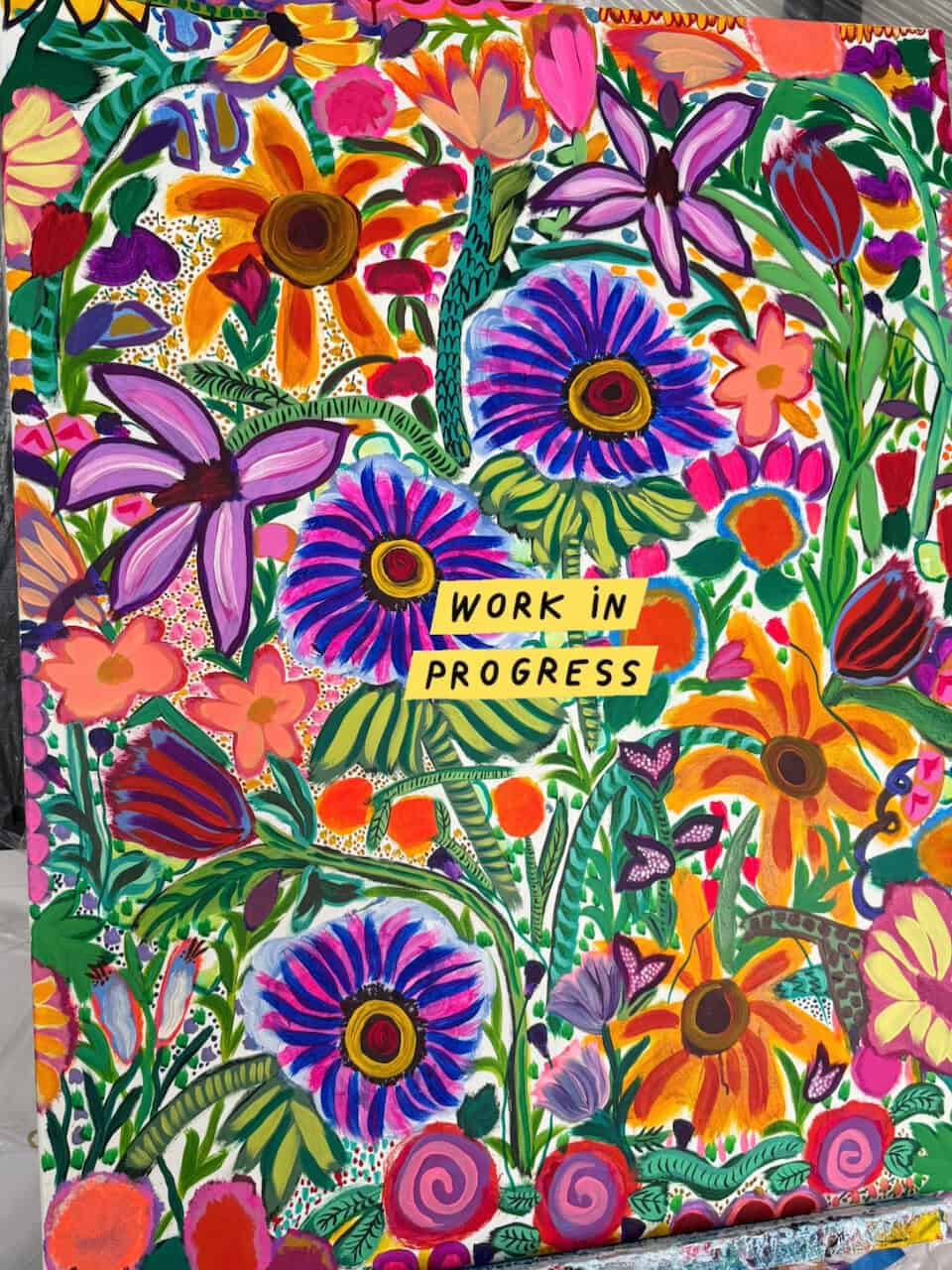
Jocelyn Ulevicus is an American artist, writer, and poet based in Paris. Her visual work often features vibrant, expressive floral compositions that serve as emotional landscapes and meditations on impermanence. In her writing, she explores womanhood, grief, healing, and transformation, tracing a personal journey through loss, trauma, and becoming.
She is the author of The Difference Between Breathing and Swallowing (2023), with essays and poetry published or forthcoming in SWWIM Every Day, The Free State Review, The Santa Fe Literary Review, Blue Mesa Review, and Humana Obscura. She was shortlisted for the 2019 Santa Fe Writers Project Literary Award for her manuscript The Birth of a Tree, is a two-time Pushcart Prize nominee, and a Best of the Net nominee. She also has an Instagram platform of over 24,000 followers, where she has been weaving her healing journey into her artistic practice for over seven years. She is currently working on her second book and building a more sustainable art life in Paris, with more exhibitions, opportunities to lead workshops, community engagement, and the publication of her memoir.
You know those women you admire?
The ones who carry themselves with elegant composure?
The ones who seem to lead with sophisticated ease?
The ones who have sustainable success, the kind that feels as good on the inside as it looks on paper?
They’ve moved from survival mode to mastery mode.
They’ve learned to lead from calm authority instead of constant vigilance.
They’ve mastered exceptional emotional intelligence, not through more effort, but through rewiring the patterns that were keeping them stuck.
You know those women you admire?
The ones who carry themselves with elegant composure?
The ones who seem to lead with sophisticated ease?
The ones who have sustainable success, the kind that feels as good on the inside as it looks on paper?
They’ve moved from survival mode to mastery mode.
They’ve learned to lead from calm authority instead of constant vigilance.
They’ve mastered exceptional emotional intelligence, not through more effort, but through rewiring the patterns that were keeping them stuck.