

Aditi has lived enough versions of her own life to recognize a pattern. In one, she followed
expectations, staying in the prescribed lane, fitting into roles that looked “successful” on paper.
In another, she stepped into a creative path that felt closer to herself, but still built around
structures that didn’t truly serve her. Those experiences shaped the way she now approaches
leadership, design, and the spaces we call home.
For years, Aditi worked inside corporate and design environments that appeared stable but felt hollow. Creativity was easily squeezed out by routine, and she felt disconnected from meaningful work. She noticed how people drifted through their days in environments that didn’t hold or support them.
That realization became her turning point. Instead of waiting for anyone to give her permission, she decided to build a practice that reflected her values, care, intention, and impact, rather than fitting into a pre-existing mold.
Aditi’s leadership didn’t begin with a title or a team. It began with a simple, urgent decision: to stop designing her life around other people’s expectations and start designing it around what truly supported her. At 16, she chose to leave an environment that did not encourage girls to
dream or be independent. Later in life, she recognized she had once again built everything around expectations rather than what genuinely supported her, and chose to change that.
Each of these moments deepened her self-trust. She learned that leadership is less about
outward achievement and more about inner alignment, about making choices that feel true
even when they look unconventional to others.
What ultimately guided Aditi was not a spreadsheet or a timeline, but a quiet, persistent pull toward more meaningful work and deeper human connection. She sensed how many women carry stress, exhaustion, and a sense of being “not enough” in silence.
“Even before I felt fully ready, I knew I was meant to build something of my own — work that wasn’t just meaningful, but genuinely supportive.” Choosing to follow that instinct shifted everything. She moved from a traditional 9–5 path into a more intentional, purpose-driven interior design practice. That decision brought back her creativity, clarity, and a sense of real alignment in her work.
Through each pivot, Aditi’s self-trust became stronger. Every time she chose a less obvious
path, leaving home early, shifting careers, stepping away from stability, she had to rely on her own judgment, even when it didn’t make sense to others.
Her sensitivity to people and environments also deepened. She became more aware of how much our surroundings affect how we feel, think, and function. A calm, intentional space can hold someone in a way that spreads outward into the rest of their life.
“And finally, a sense of purpose became clearer. I’m no longer just working to achieve
something externally. I’m building something that feels aligned and genuinely supportive to
others.”
For Aditi, the most powerful truth about being a woman in leadership is this: when women lead, it’s not just about outcomes, it’s about how people feel along the way.
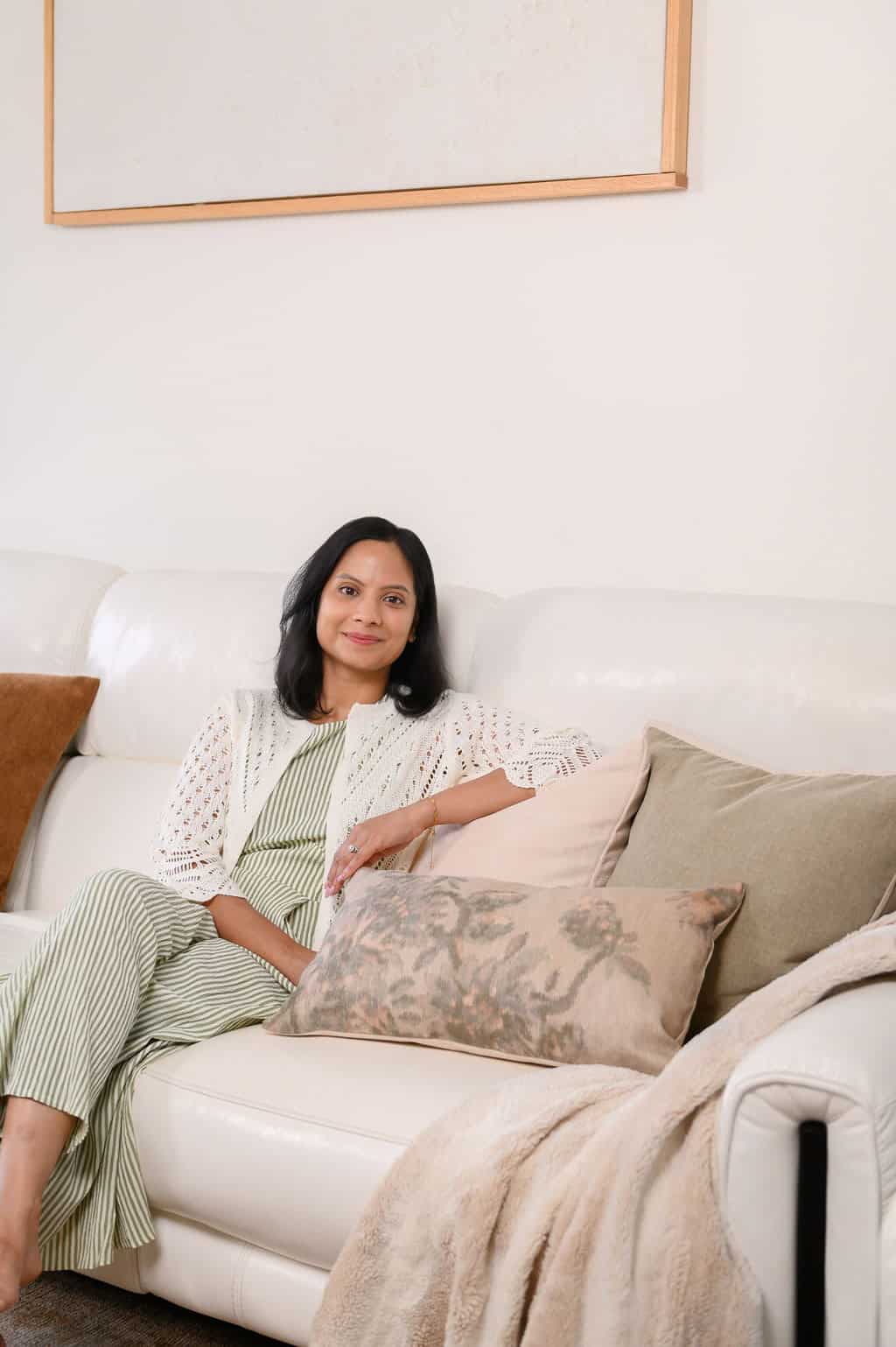
Community and family have been both Aditi’s foundation and her learning ground. Growing up,
she experienced the strength and complexity of shared living, and later in life she felt the absence of support when she needed it most. That contrast shaped how much she values creating environments where people feel held, not alone.
For any woman facing a similar crossroads, Aditi’s advice is simple:
“Don’t wait to feel ready. Choose one decision you’ve been postponing and move on it, even in a small way. Momentum creates clarity.”
Aditi is the founder & interior designer of Holista Homes, a design practice focused on creating calm, intentional homes that make daily life feel easier and more supportive. She works with people who want spaces that reflect how they actually want to live. Across her projects, her focus remains the same: to help people feel more grounded, supported, and at home in the rooms they inhabit every day.
You know those women you admire?
The ones who carry themselves with elegant composure?
The ones who seem to lead with sophisticated ease?
The ones who have sustainable success, the kind that feels as good on the inside as it looks on paper?
They’ve moved from survival mode to mastery mode.
They’ve learned to lead from calm authority instead of constant vigilance.
They’ve mastered exceptional emotional intelligence, not through more effort, but through rewiring the patterns that were keeping them stuck.

You know those women you admire?
The ones who carry themselves with elegant composure?
The ones who seem to lead with sophisticated ease?
The ones who have sustainable success, the kind that feels as good on the inside as it looks on paper?
They’ve moved from survival mode to mastery mode.
They’ve learned to lead from calm authority instead of constant vigilance.
They’ve mastered exceptional emotional intelligence, not through more effort, but through rewiring the patterns that were keeping them stuck.